Can you differentiate between a transient coffee shop and one that consistently attracts you due to its community-driven nature? On your way to work in the morning, you might drop by your closest coffee shop, order a drink, wait for it, and then grab and leave. In the afternoon, during your break, you would drop by another coffee shop, take your time enjoying your coffee on-site, and experience the place's rich culture. Same product, completely different experience!
Coffee shops that build a strong culture, and ultimately a community, create a completely different experience. In a community-driven coffee shop, you’ll notice people greeting each other by name, or someone sharing a table with a stranger, or a group of strangers sharing a table while working on their laptops. These coffee shops elevate the experience by adding a level of warmth and relaxation that is definitely worth it. So what makes a coffee shop community-driven? It rarely happens by accident.
What does community actually mean?
A coffee shop becomes a community not when it’s busy, but when people begin to recognize each other, return regularly, and interact, however briefly, in ways that create a sense of belonging. The strength of a community depends on how consistently these things happen. For example, customers who repeatedly visit the same coffee shop become regulars and are recognized by the baristas, and possibly other regular customers can recognize and greet them. However, a stronger community could foster commonality among regulars, leading to interaction among them and between regulars and new customers. The stronger the community, the greater the sense of belonging, which creates customer stickiness. Not all communities look or behave the same; for example, some coffee shop communities are created around rituals, like the same people, same time. Other communities could be built around interests, like coffee shops fostering creativity, or designed for remote workers or coffee nerds. Additionally, coffee shop communities could be homogenized by a shop's vibe or design. Great coffee shops will usually combine more than one criterion for a successful community creation.
Case studies
I’ve been to many coffee shops, but here are a couple that I think clearly had a sense of community.
1- Kean Coffee in Irvine, CA, USA
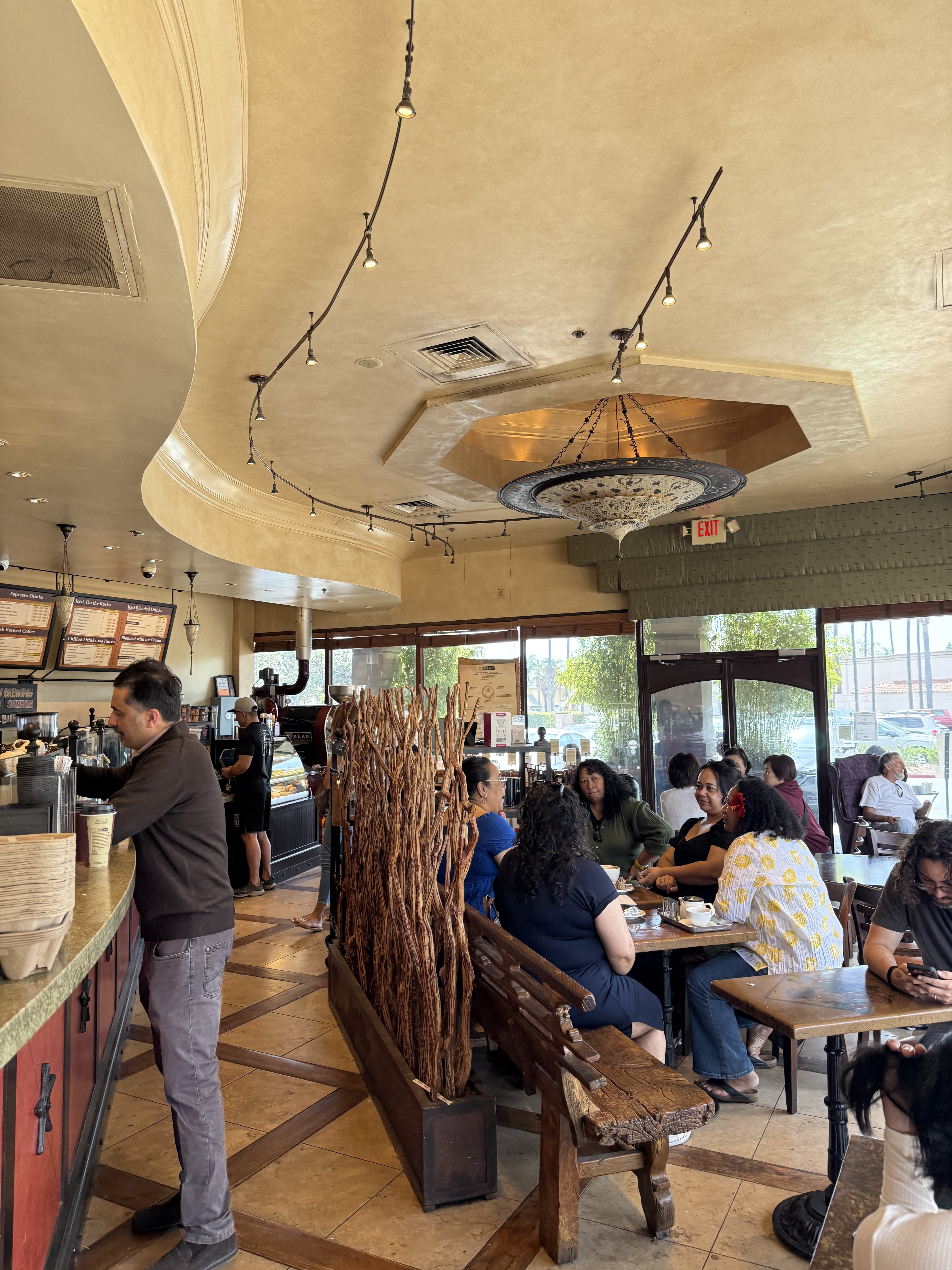
Kean Coffee strategically doesn’t offer free public WIFI to foster a community focused on socialization rather than a workspace environment with laptops. This is clearly working because it is one of the rare coffee shops where I noticed everyone knows everyone, and there are a lot of regulars. I was surprised by the number of casual conversations among groups enjoying coffee, and I frequented the coffee shop, noticing that many of these groups were regulars. It’s a true sense of a strong community. Additionally, to my surprise, I observed regulars approach nearby coffee drinkers and start conversations, including with me. I was really delighted by this community, and it elevated the coffee warmth experience. But was the lack of public WIFI enough to establish this warm and friendly community? It was a good start, but there was more to strengthen this culture. The baristas were friendly, engaging, and calming, emphasizing a warm,friendly, and personal environment. Having a quick conversation with the barista, who, after a couple of visits, would know by name, builds the confidence to reach out to other strangers and start an interesting conversation. Most in-house coffee drinks are served in ceramic or glass cups rather than to-go plastic or paper cups, emphasizing a culture of sitting, relaxing, and enjoying your coffee. The furniture and color theme of the coffee shop are all based on milk-chocolate-brown wood, adding to the warm feeling.
What Kean Coffee does well is simple: it removes distractions and creates a space for people to actually notice and talk to each other.
2- Fyngan Coffee in partnership with Rituals Bakery, in EL Maadi, Cairo, Egypt
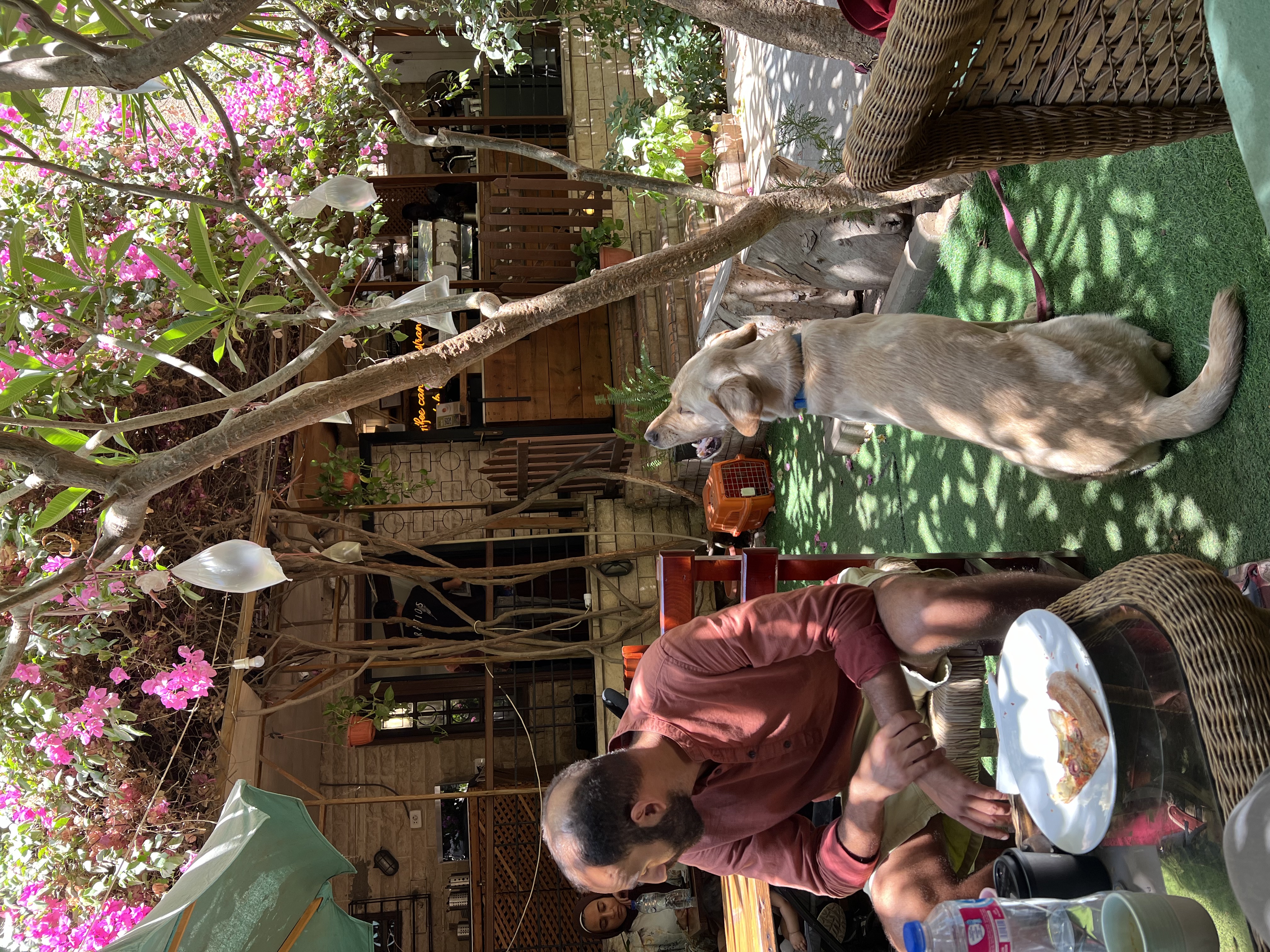
Fyngan Coffee + Rituals Bakery's vibe is like having a coffee gathering with friends and family in your backyard. The building is actually a classic family house turned into a cafe. The minute you enter the cafe, where the ordering area is, you feel like you’ve entered someone’s house. It feels very cozy and warm. The seating area in the building's backyard is surrounded by a beautiful garden, with natural shade from the dense trees. Most of the furniture in the cafe is backyard furniture, which fits the theme perfectly. This warm family-house vibe effectively shapes the cafe's culture and community. This warm house vibe attracts coffee shop guests to be part of this culture and community; this is its magic! Frequently, I see a group of friends or family members sitting around one of the backyard tables, chatting while enjoying their coffee and pastry; it’s a recurring, noticeable theme. I really enjoyed the warm, friendly, and happy community culture in this cafe, and it’s all thanks to the cafe's design and the overall building structure. The design doesn’t just look cozy, it makes people behave like they’re already among friends.
3- MAME Josef Coffee, Zurich, Switzerland
Mame is a small coffee shop whose baristas have won multiple championship awards. The cafe is in a nice, quiet, and hippy residential neighborhood, with a playground park across the street. I went there on a Saturday morning and immediately spotted a couple of young families with toddlers or young kids in or around the coffee shop, enjoying their specialty coffee from this multi-award-winning small coffee place. There is very limited seating in the shop and a single bench outside the front, yet the coffee shop is packed with coffee drinkers standing in and around it. The location and the peacefulness of the neighborhood helped in making this place a family-friendly gathering spot, especially, I guess, on the weekend. It’s rare to find a specialty coffee shop that’s a community of young families, but in this case, it was all about the location. And I got to tell you this really worked for Mame; the family culture created a cozy, bright, and innocent environment. This is a coffee community formed by the shop's location and, obviously, the award-winning coffee! I specifically enjoyed this on a Saturday morning.
The 4C’s Behind Every Coffee Community.
Looking across these coffee shops, their communities don’t emerge randomly—they follow a consistent pattern. What differs is not whether they build community, but how they activate it.
This is where the 4C’s come into play:
-
Coffee — the reason to come Great coffee is the entry point. It attracts people and sets expectations. Without quality, there is no reason to return—and without return, there is no community.
-
Culinary — the reason to stay Food and pairings extend the experience. They slow people down, encourage them to sit, and create moments that are meant to be shared. A coffee shop focused only on grab-and-go rarely creates the conditions for connection.
-
Context — the behavior shaper The physical space defines how people act. No WiFi invites conversation. A backyard setting encourages relaxation and openness to others. A small, standing-only bar creates a sense of proximity. Even the location of the coffee shop shapes the kind of community that develops. Context quietly nudges people toward or away from interaction.
-
Community — the outcome, not the input Community is not something a coffee shop can declare—it is something that emerges. When people return, recognize one another, and interact in the right context, a sense of belonging naturally forms. However, there are small things coffee owners and baristas can do to strengthen this community, such as being friendly and social and building connections with regulars.
The verdict
The best coffee shops don’t just serve coffee. They quietly build a sense of belonging, one small interaction at a time. They don’t force community, they create the conditions for it!
Follow us for future blogs on practical steps you can take to build a targeted, successful coffee community.
Comments